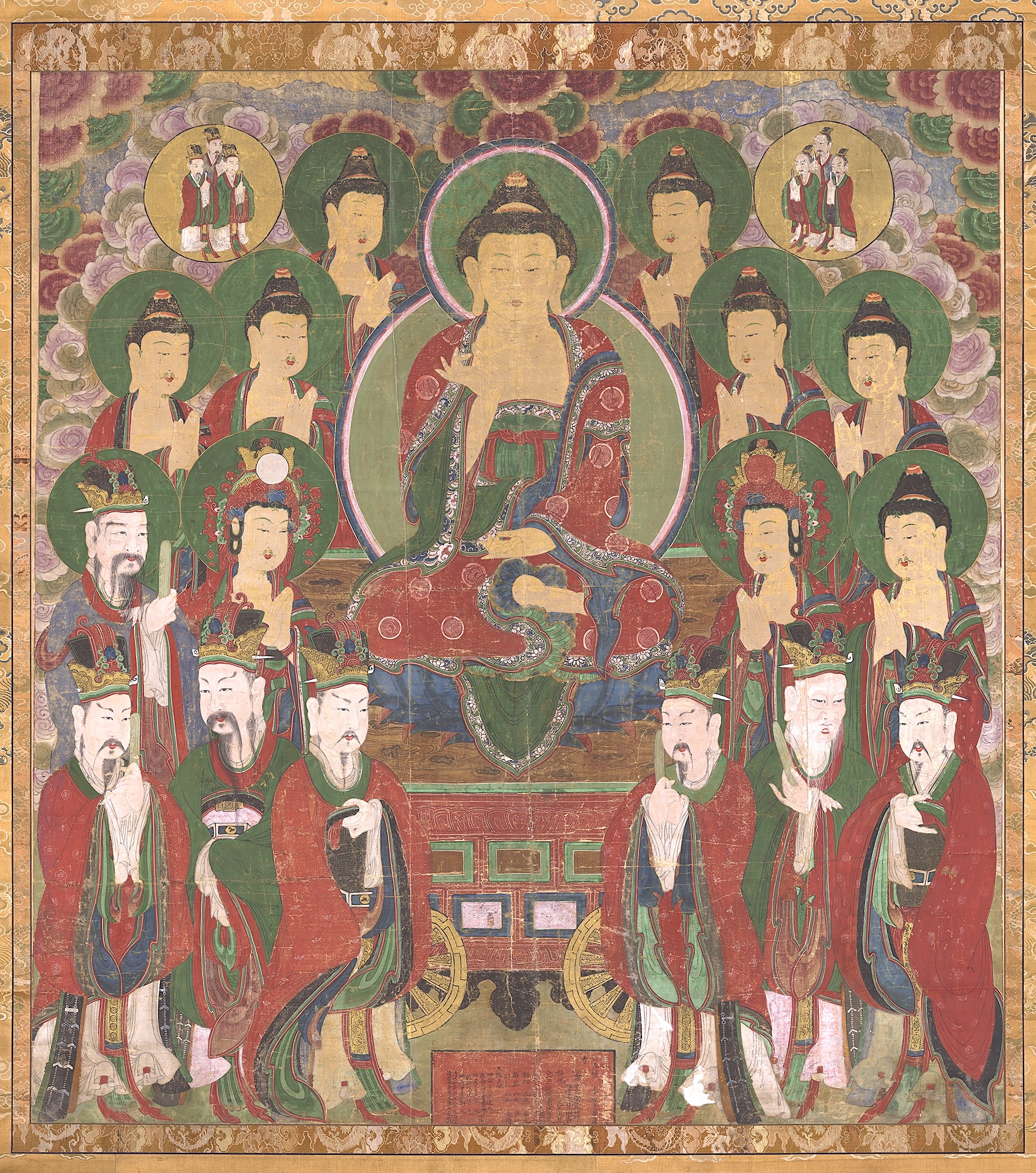

Buddhas and stars
Conference by Francis MACOUIN, curator at the Guimet Museum (National Museum of Asian Arts) in Paris, member of the CNRS China-Korea-Japan research team, and has worked specifically on architecture during the Joseon period.
Among Korean paintings from the second half of the 19th century, it is not uncommon to find depictions of a Buddha riding on a chariot, sometimes drawn by an ox. This Buddha, the Radiant One, appears as a representation of the North Star. He may be accompanied by seven other Buddhas, deifications of the stars in the eastern constellation of Ursa Major (the Great Bear). Furthermore, he is often surrounded by numerous other deities, all associated with celestial bodies such as the 28 lunar lunar mansions. Among these figures are also stellar deities of Taoist character. One must go back in time, to Tang Dynasty China, to understand the layers of this accumulation of astral effigies.